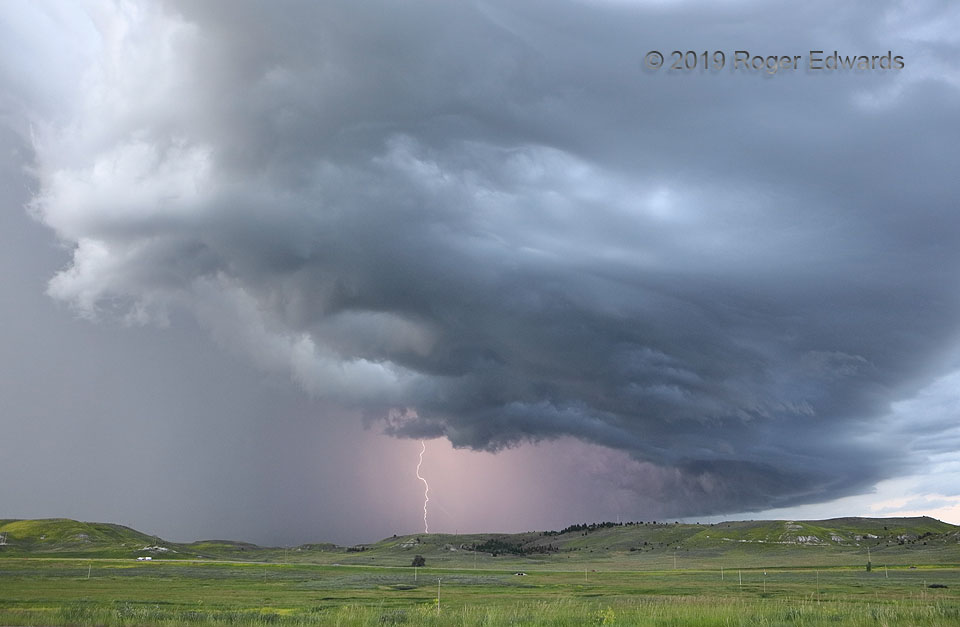
A multicellular belt of thunderstorms that had yielded a pleasantly stormy sky around Gillette proceeded east-northeastward, offering a final, delightful scene of lightning and textured arcus clouds while rolling off into a hilly area of northeastern Wyoming with few roads. This was a satisfying ending to a long day of driving and photography from the western Bighorn Mountain slopes past a … [Read more...]
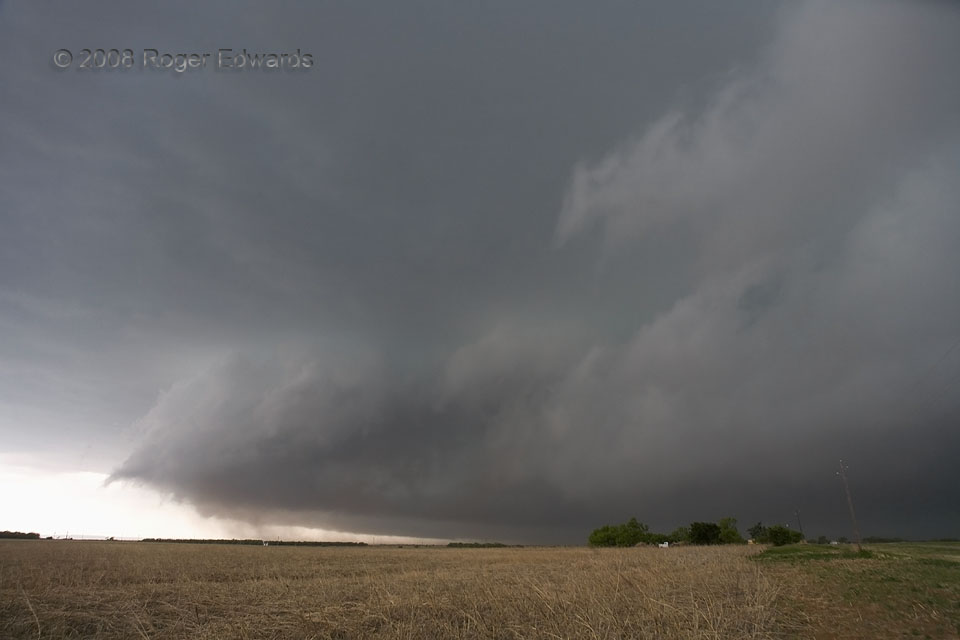
HP Menace
A ragged shelf cloud formed atop the gust front from a heavy-precipitation (HP) supercell in NW Texas—one of many dark, menacing, mercilessly severe, HP storms I've intercepted over the years, in the general corridor surrounded by Dallas, Wichita Falls, San Angelo and Stephenville. The cumuliform character of the clouds atop the left edge of the shelf indicates the cloud base was convective in … [Read more...]
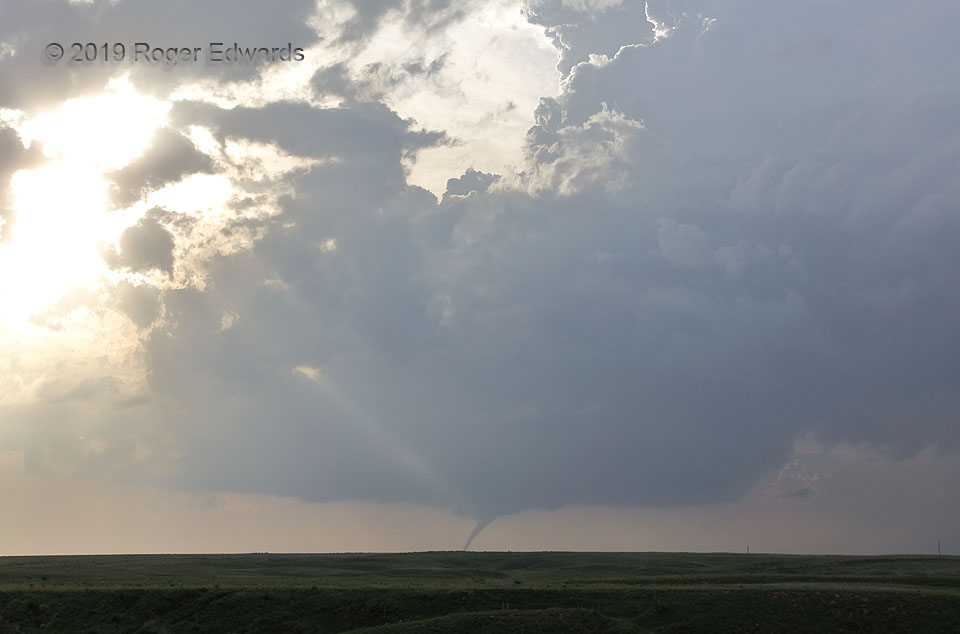
Border Crosser
Despite being a somewhat high-based storm on the High Plains, this strongly tilted but large-updraft beauty of a supercell went tornadic within less than an hour after the first convective towers—definitely sooner than expected, and while we still were zigzagging and fighting awkward road positioning with respect to a river crossing in desperate attempt to get closer to the storm's projected … [Read more...]
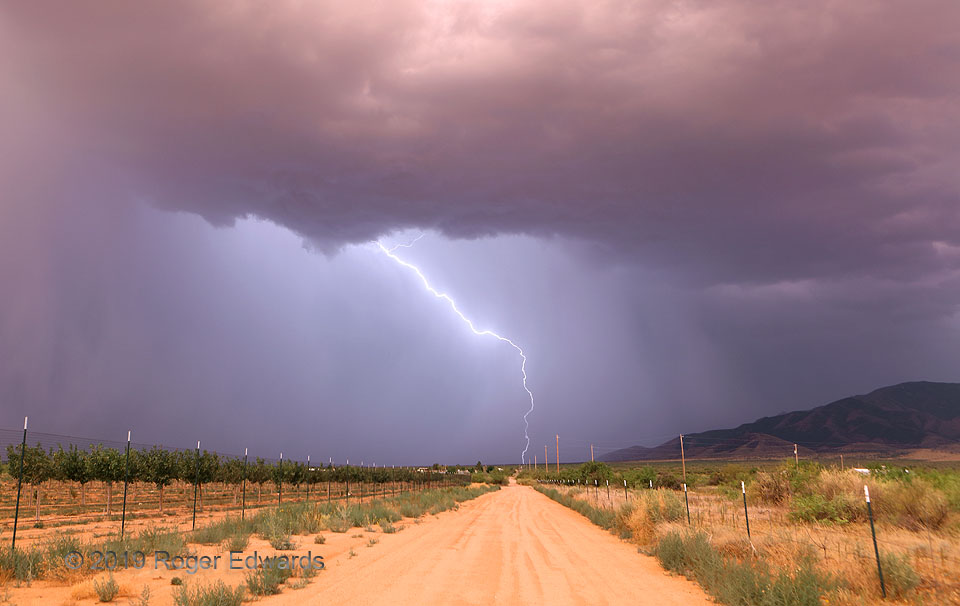
Electric Avenue
In a rather intermittent, yet protracted show of lightning over southeastern Arizona, a couple of sweet strokes of sizzling electricity blasted through the sky, as peak sunset colors filtered through the clouds overhead. This was the first during that interval, after a spectacular mountainside blast with rainbow. This current followed a path not from the highest ground around, but instead, … [Read more...]
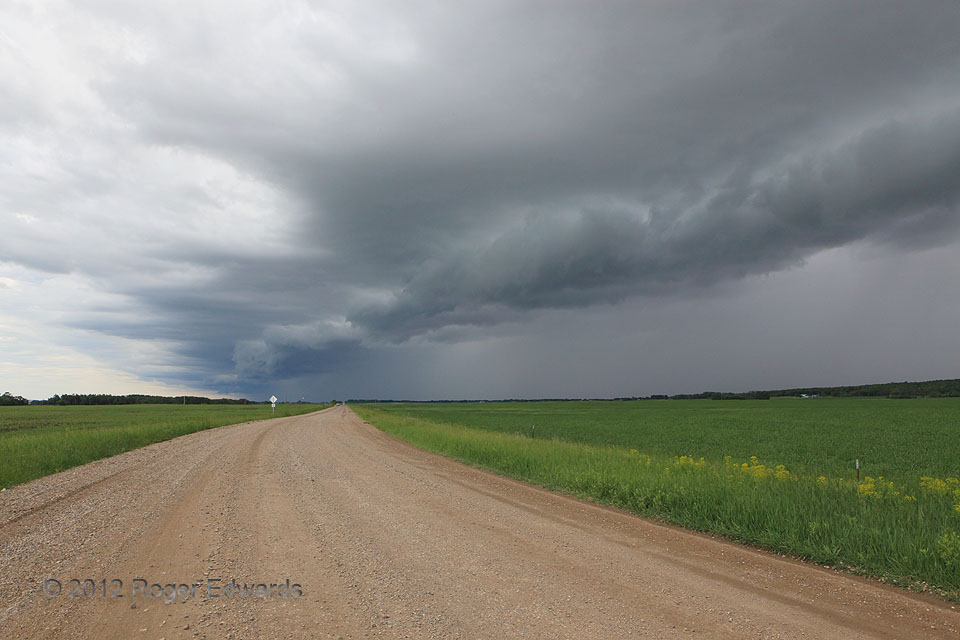
North Dakota Density Current
Even though this squall line was shallow, it produced enough precipitation to cool the core air considerably, and in translating quickly east-northeastward, forced a good deal of only marginally stabilized air over the top of the cold, dense current of outflow. That process forced a shelf cloud (a type of arcus cloud connected to its parent storm's cloud mass) to condense, as it all rolled past … [Read more...]
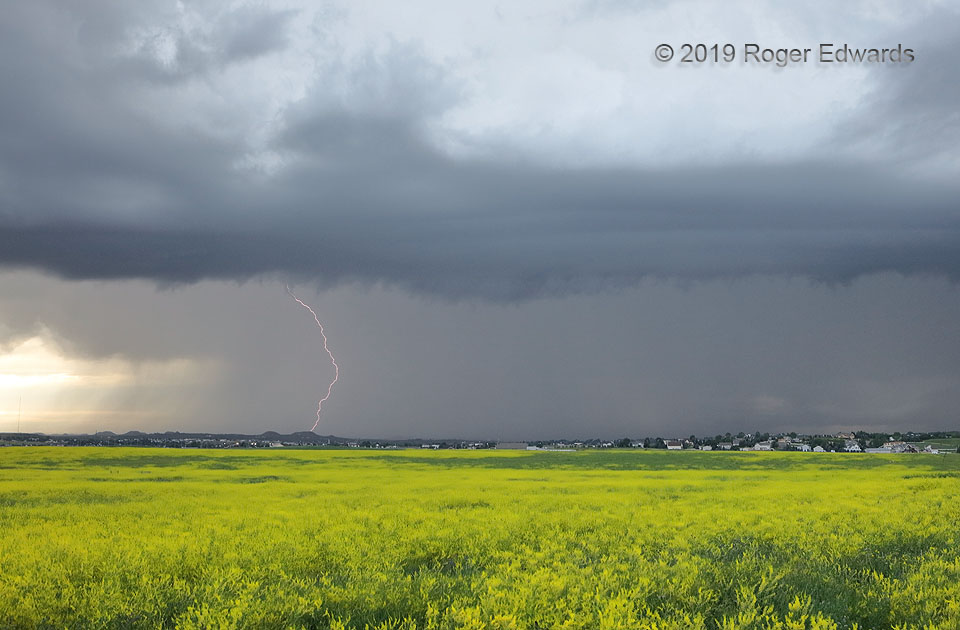
Floral and Electric Fields
Sometimes the strategy of where to end a chase day can get tricky. Reserve lodging too soon, and one may end up far from where the storms finish presenting their majesty to the observer. Too late, and lodging may be unavailable, uncertain, costly, or unsanitary. After finishing with a short-lived but ravishing supercell well to the northwest, near Sheridan, and knowing the next day's target … [Read more...]
- « Previous Page
- 1
- …
- 194
- 195
- 196
- 197
- 198
- …
- 425
- Next Page »