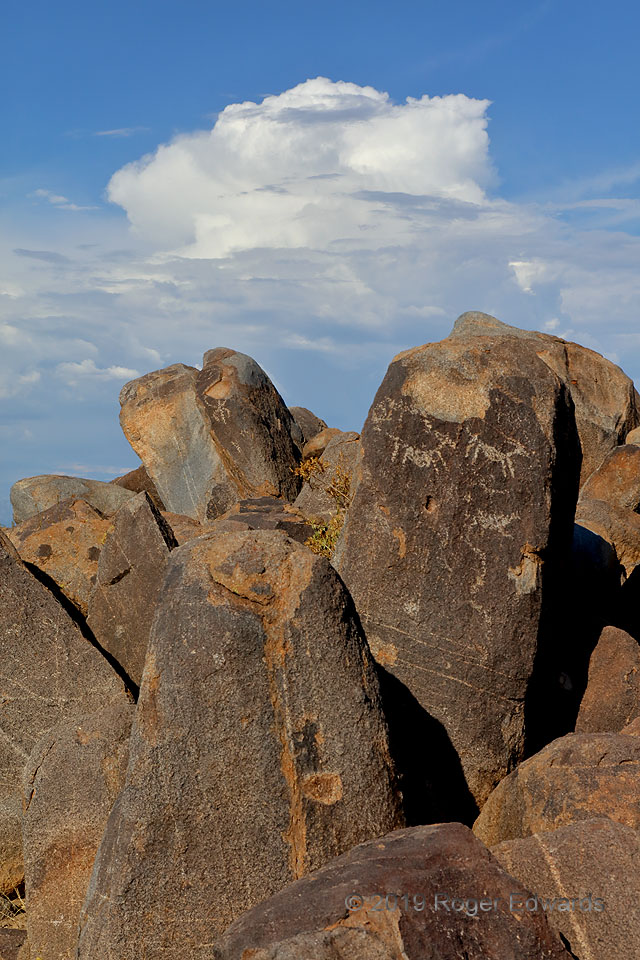
Petroglyphs make a fine late-afternoon foreground for an otherwise ordinary, small cumulonimbus that developed over the next mountain range. To make this rock art, Hohokam people, who occupied this area around 1600-400 years ago, used stone tools to scrape through the "desert varnish" coating, exposing unweathered sandstone beneath. The motivation for these petroglyphs, and their intended … [Read more...]
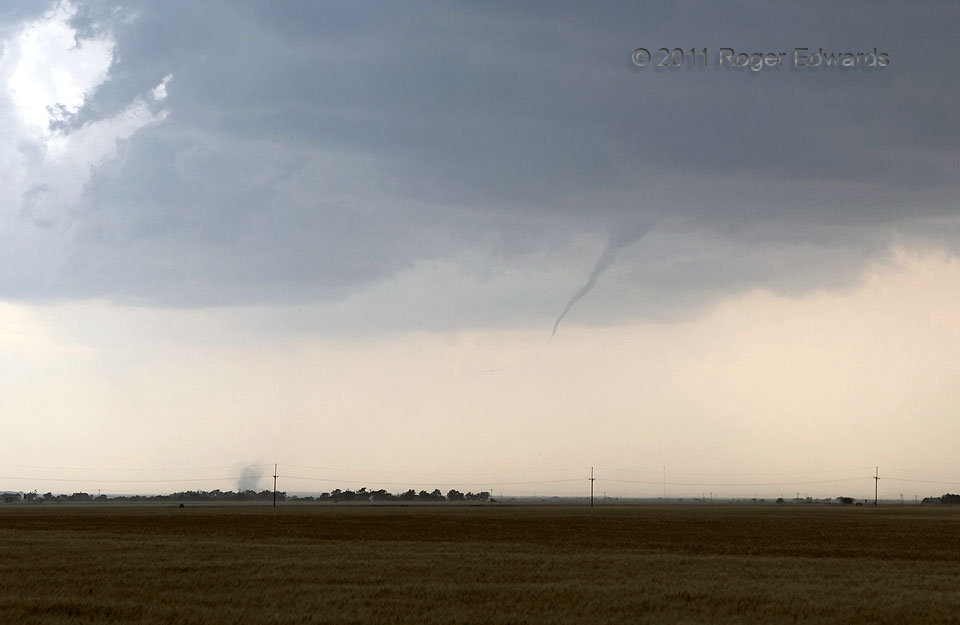
Tornadic Tilt
This tornado's debris cloud (lower left) was obviously well-displaced from its cloud-base vortex. So what caused such a severe tilt, how would this affect warning, and where would the tornado be recorded? Here, outflow from the high-based storm's translucent core, near right edge, kept the bottom of the vortex tube near the same spot. Meanwhile the parent storm moved off to the northeast, … [Read more...]
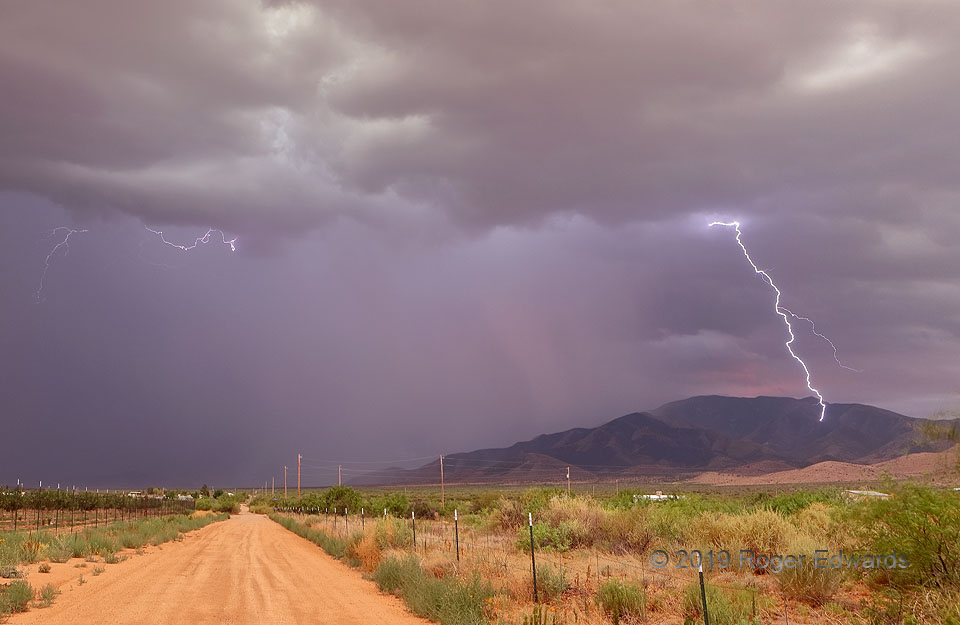
Electrifying Mt. Glenn
As the southeastern Arizona desert day neared its finish, and the stormy sky slowly reddened both itself and the landscape beneath, a brilliant flash blasted Mt. Glenn broadside. The stroke slammed the mountainside about halfway up, proving once again (among countless occasions I've seen) that lightning doesn't necessarily strike the highest point around. In fact, not once during this hour-long … [Read more...]
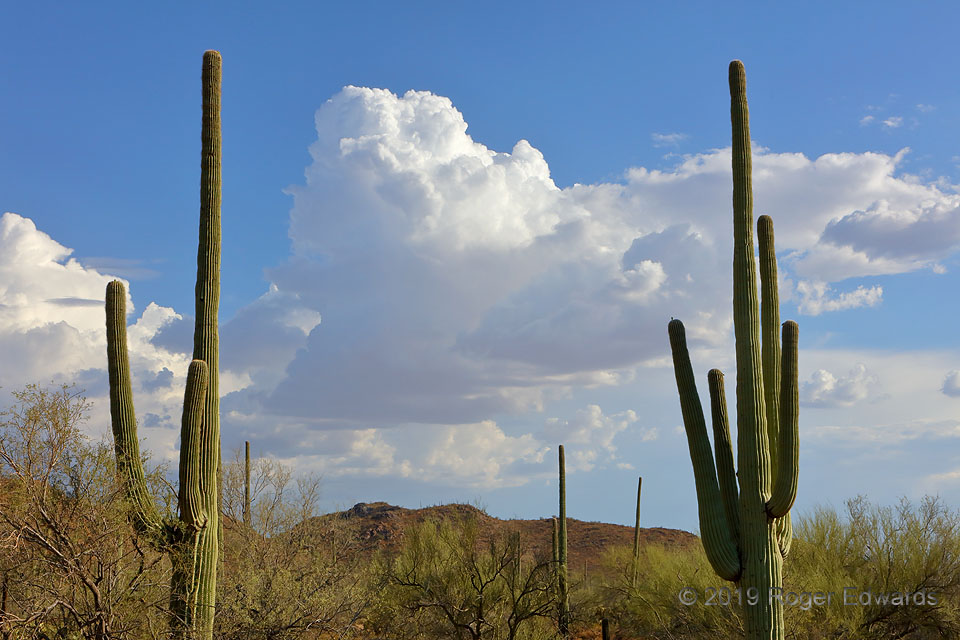
Convective Field Goal
One fine, toasty desert afternoon in the summertime, a high-based towering cumulus framed itself nicely between two rather prickly "goalposts". I'll let the reader decide whether this score was worth three points! 14 WNW Tucson AZ (15 Jul 19) Looking ESE 32.2831, -111.2105 … [Read more...]
Two LPs
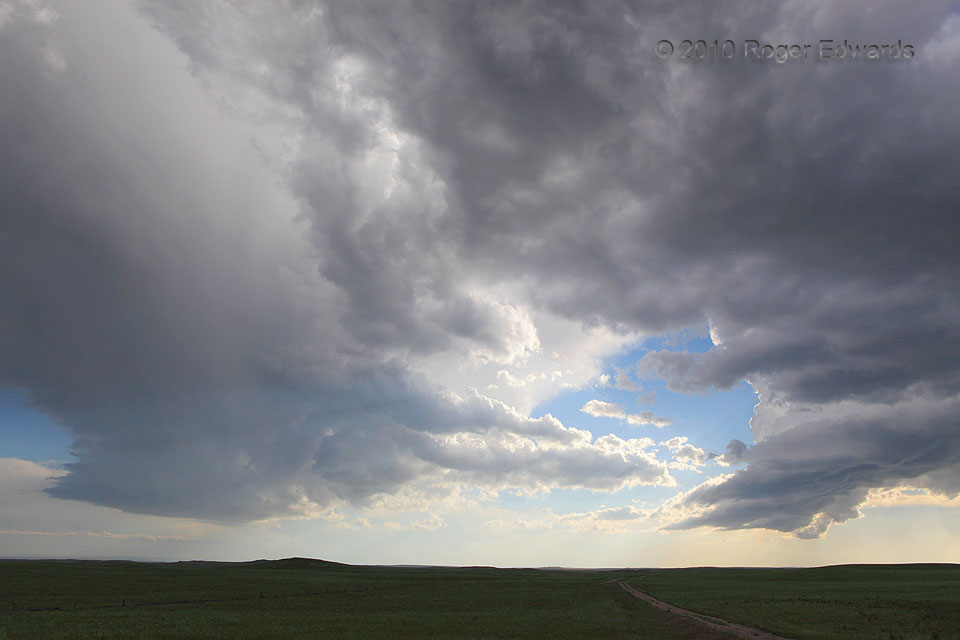
Unusual in such close proximity, two high-based, low-precipitation (LP) supercells drift across the western Nebraska sky in opposing stages of marginal supercellular organization, as if ships of vapor passing in the daylight. The right (northern) storm, small and shrinking, had been the first, but no longer produced noticeable rain, and would be mere wisps of remnant cloud material within another … [Read more...]
Wind on the Way
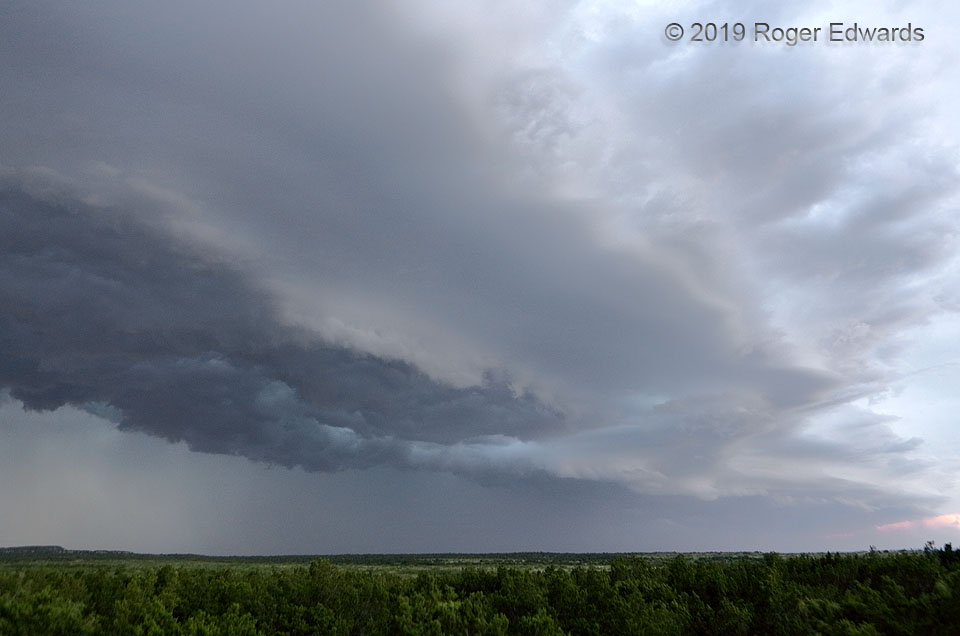
This wild sky had a rather simple cause. A shelf cloud, formed and driven by damaging outflow winds, advanced across the northwest Texas scrublands, while separate lifted layers above the gust front condensed cloud material into wild, banded and spiky formations. Meanwhile, trailing cores of heavy rain and hail also spit forth lightning, making westward travel hazardous in the area. 4 WNW … [Read more...]
- « Previous Page
- 1
- …
- 203
- 204
- 205
- 206
- 207
- …
- 425
- Next Page »