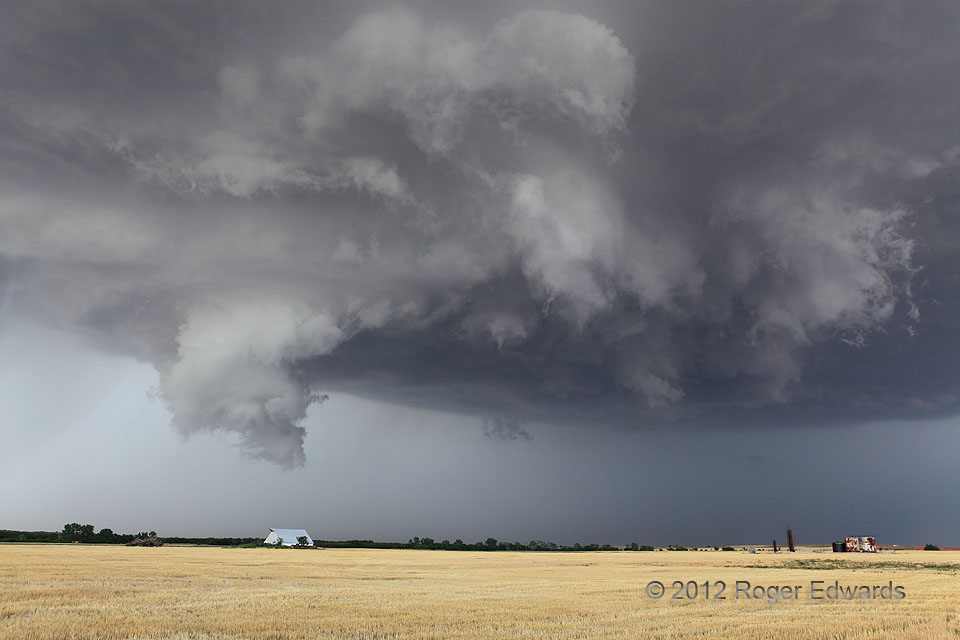
A high-based supercell, with skeletal yet sharp texturing, seemed more fitting over the central High Plains than the red-dirt flatlands just northwest of the Oklahoma City metro. The wall cloud at left, though narrow and scuddy, rotated steadily. This caused concern that it might produce a tornado were the circulation to tighten up any further. Instead, a surge of outflow kicked past and under … [Read more...]
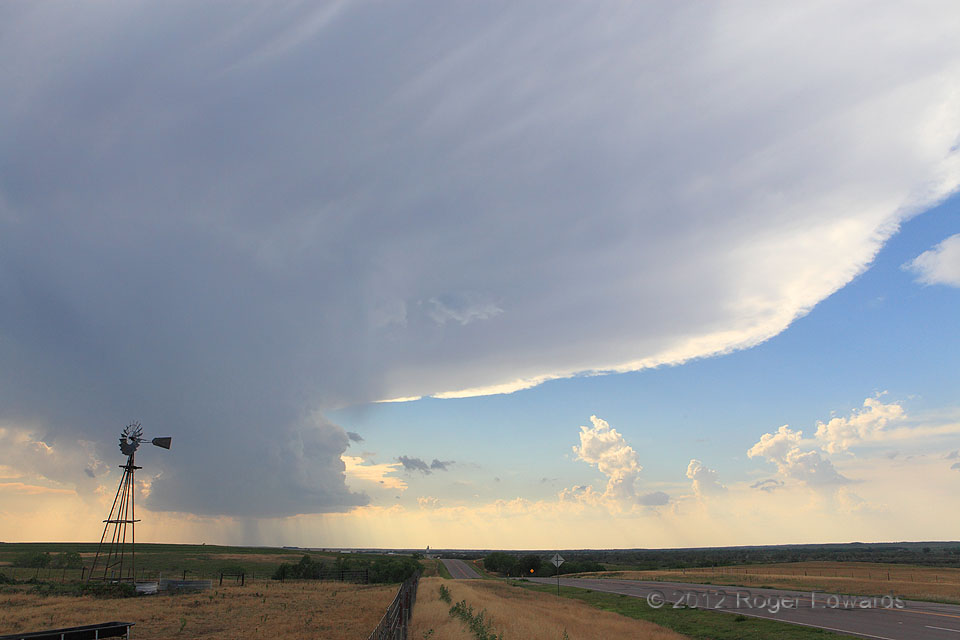
Spreading Anvil Cloud
Despite the small multicellular updraft area, it was intense enough to pump copious volumes of moisture into the anvil—a cloud formation unto itself, but one that is a defining part of (and dependent upon) cumulonimbi. The small cumuli at right, beneath the NW edge of the anvil, are splendid examples of convection forming along a differential-heating boundary. We often see such cloud lines … [Read more...]

Arcus Cloud over the Flint Hills
The storm-intercept day began way up in Council Bluffs, IA, and ended east of Wichita, KS, with this beautiful skyscape. Along the way, we saw a few supercells, most heavy-precipitation in character, one with a classical rotating wall cloud, and even a flanking-line funnel. After all that afternoon action, this was an ideal way to finish the day. Atop a limestone plateau fringing the Flint … [Read more...]
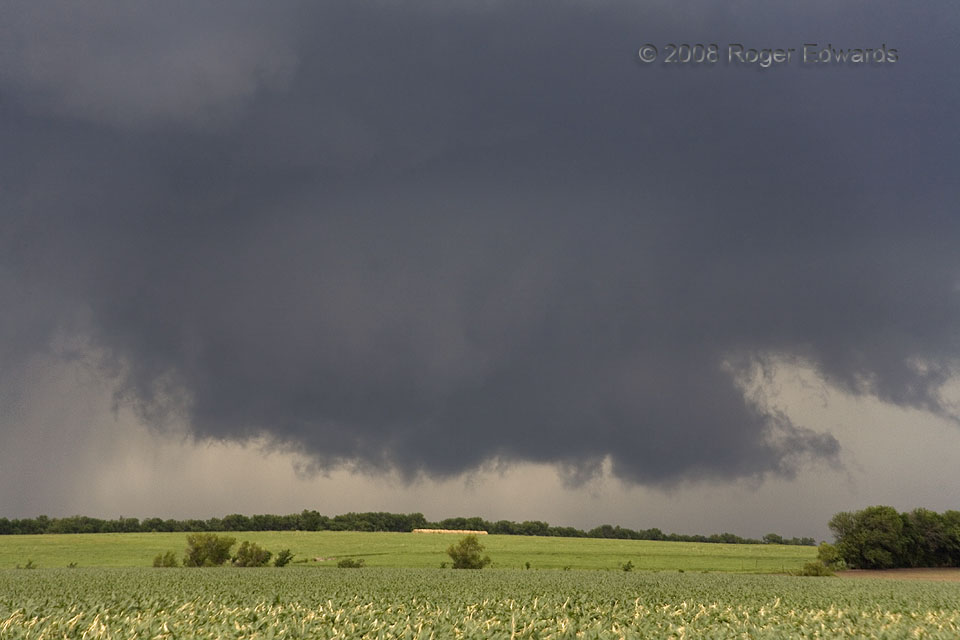
Circulation near Emporia
This storm spun out of the Flint Hills as part of a chain of mostly messy supercells, carrying with it a load of heavy precipitation and the related baggage of smaller storms dragging along its immediate rear flank. Somehow, unlike with most of several other low-level circulations we saw on this fine day of eastern Kansas storm observing, this strongly rotating and classically formed wall cloud … [Read more...]
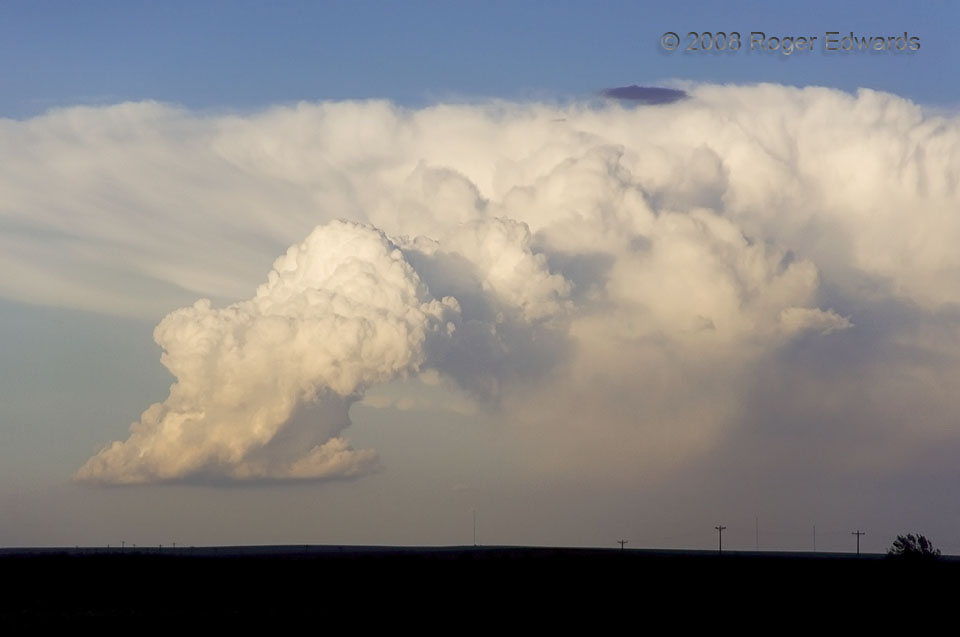
Skinny, Tilted Cb Updraft Tower
Some form of this resilient convective plume had been around for many hours, though it crawled only a few tens of miles in its entire lifespan. It began in mid-afternoon as the "Cheyenne Wells Antisupercell" and outlived a line of "landspout"-producing storms to its south. Its rear-flank core treated us to a nice double rainbow north of Kit Carson. Then we found a motel and restaurant in town, … [Read more...]
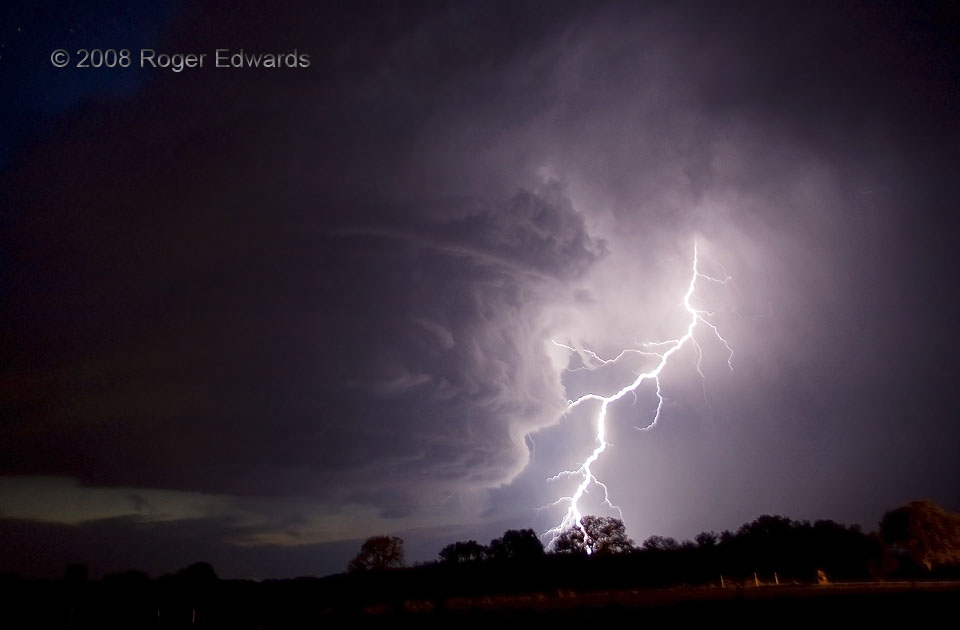
Vault CG
As a spectacular low-precipitation (LP) supercell continued to spin away into the deepening nightfall, it occasionally erupted with a wonderful lightning display. The first was cloud-to-air, this one cloud-to-ground. The stroke here originated atop the visual vault region of the storm: a notoriously productive area for lightning thanks to the intense air motions, rapid charge separation, and … [Read more...]
- « Previous Page
- 1
- …
- 229
- 230
- 231
- 232
- 233
- …
- 425
- Next Page »