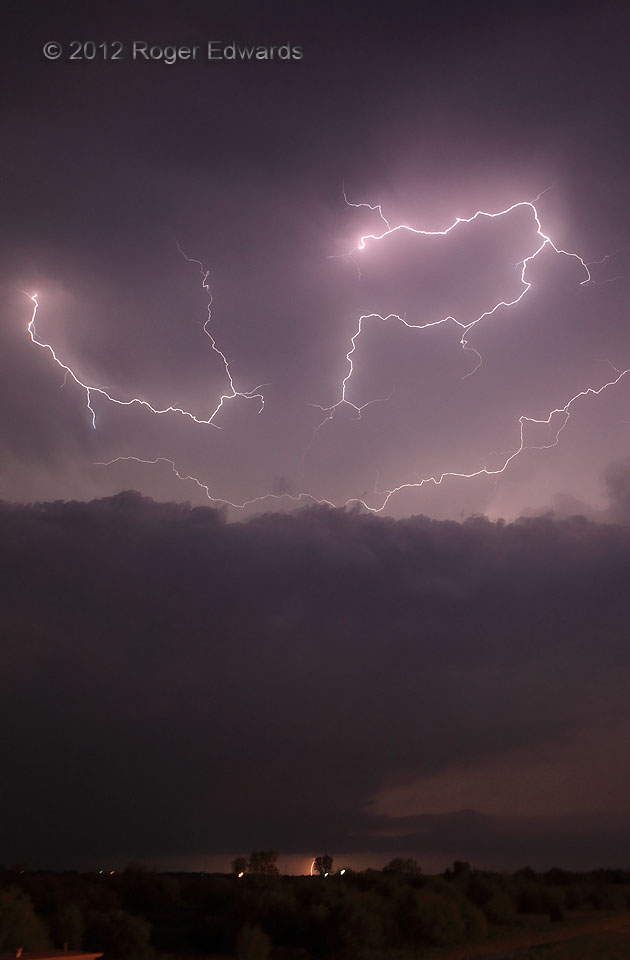
"Anvil zips" flash across the sky above a low/middle-level cloud deck, while distant cloud-to-ground strokes accompany a tornadic storm located over the southeast side of Wichita. This sort of filamentous lightning flickers frequently along the underside of many supercells' anvils, just above and beyond their vault regions. Here, one of the filaments bears a loose resemblance to a question … [Read more...]
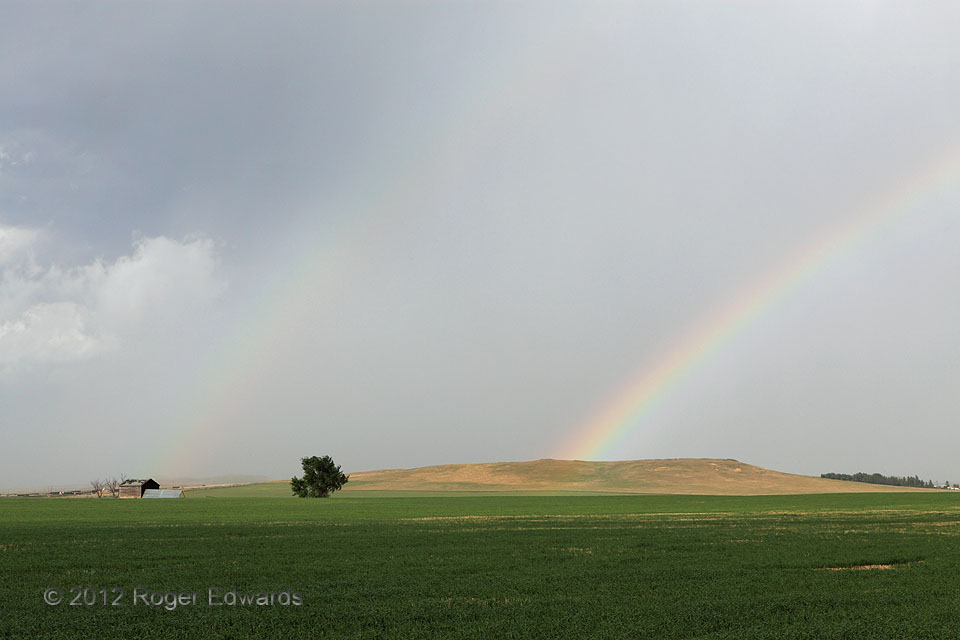
Double Rainbow, North Dakota
We found this double-arching optical gem while penetrating the back fringes of a storm whose entire western side later would come alive with light and beauty across the western Dakota sky. Colors in the outer rainbow always are reversed in order from those of the main arc, and are dimmer, because the light has been double-reflected off the inside of drops before escaping to reach our … [Read more...]
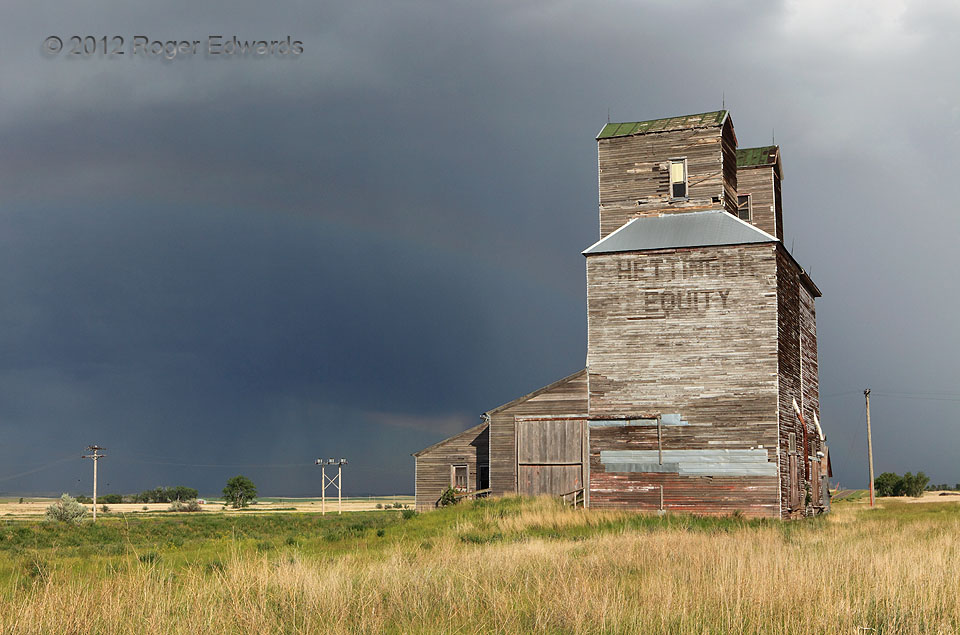
Storm Light at Hettinger Equity
Darkness of a high-based storm and its precipitation core, infused subtly by the early stages of a double rainbow, make a splendid backdrop for the illuminated wooden bulk of the abandoned Hettinger Equity grain elevator. Unfortunately, the following October, most of the town of Bucyrus was burned up by a wildfire, except for a few buildings and this old grain elevator. Bucyrus ND (13 Jun 12) … [Read more...]
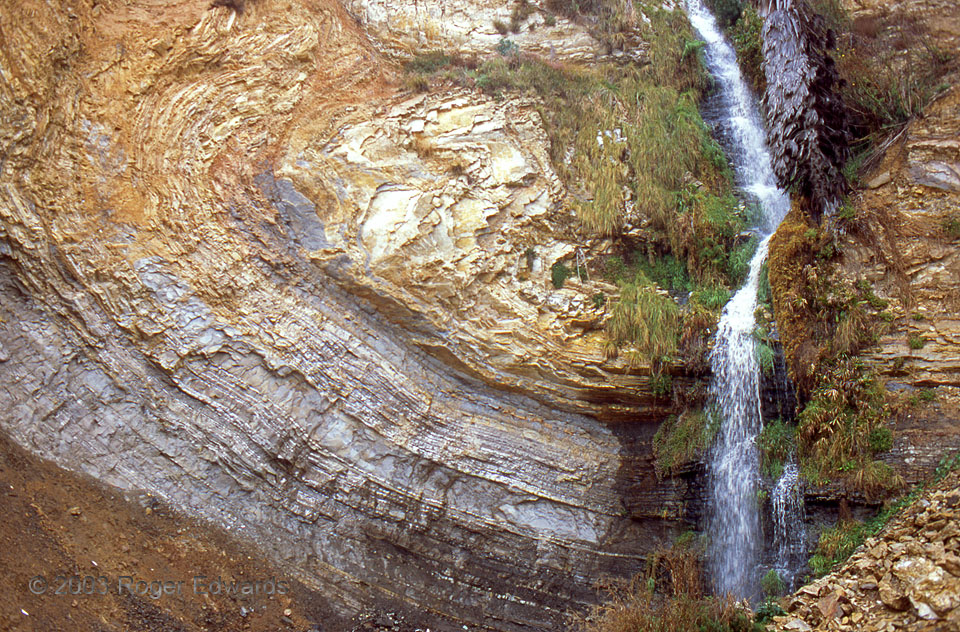
Falls’ Fault
The tightly curved beds here were laid down flat! On the coast of southern California, the sedimentary rocks have been folded and contorted every which way. To complicate matters, they also endure splitting and shifting. To the right of the falls, the layers have been shifted outward and slightly offset, because a fault (interface between two moved rock slabs) separates them. Streams and … [Read more...]
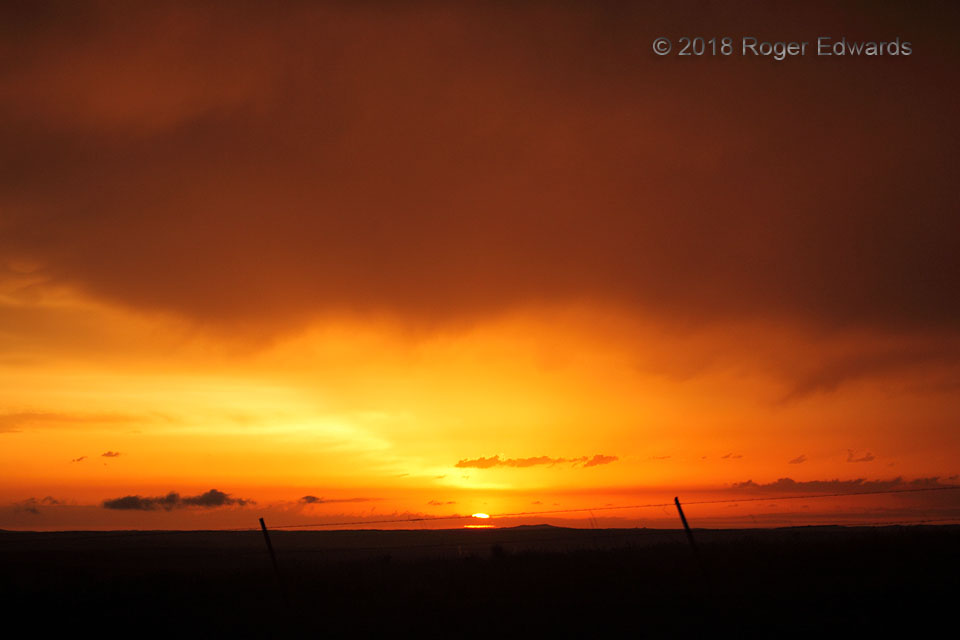
Sunset on the Range
Anvils and trailing precip regions from organized, eastward-moving, forward-propagating thunderstorm complexes usually slope upward gradually with westward extent, the rain gradually becoming lighter. That was the case here, where the resulting large area of the fuzzy cloud underside, and of precipitation aloft, caught the setting sun's light and diffused it marvelously across a big sector of the … [Read more...]
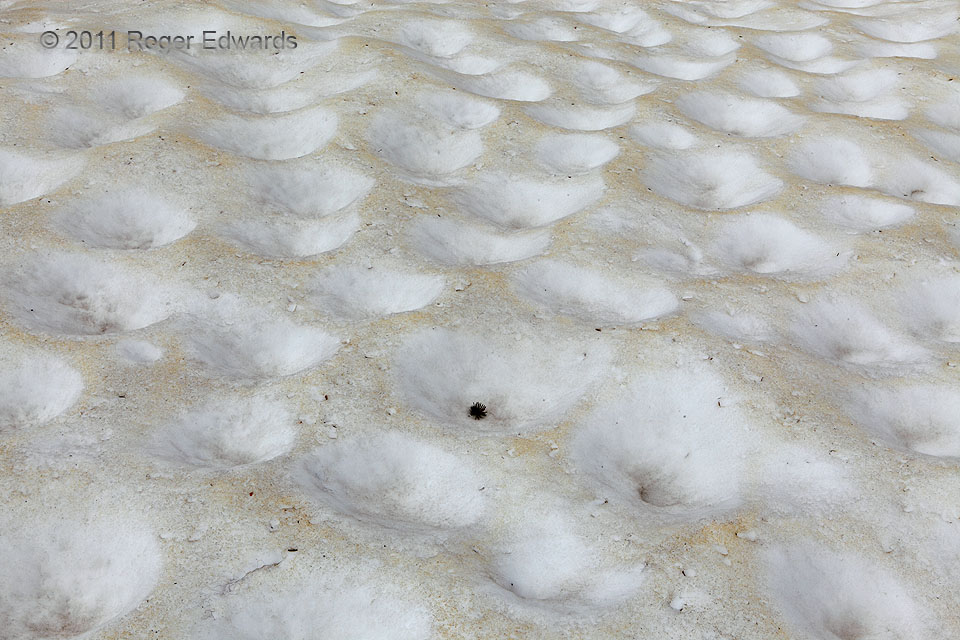
Snow Divots
After one of the snowiest winters and springs on record, mid-July found fields near Lake Tipsoo that normally are verdant and profusely carpeted in wildflowers still buried in deep snow. By this time, the old snow had gotten dirty and granular on top, covered with windblown deposits and plant material, and pockmarked with remarkably regularly spaced and sized divots. Dark material accumulating … [Read more...]
- « Previous Page
- 1
- …
- 226
- 227
- 228
- 229
- 230
- …
- 385
- Next Page »