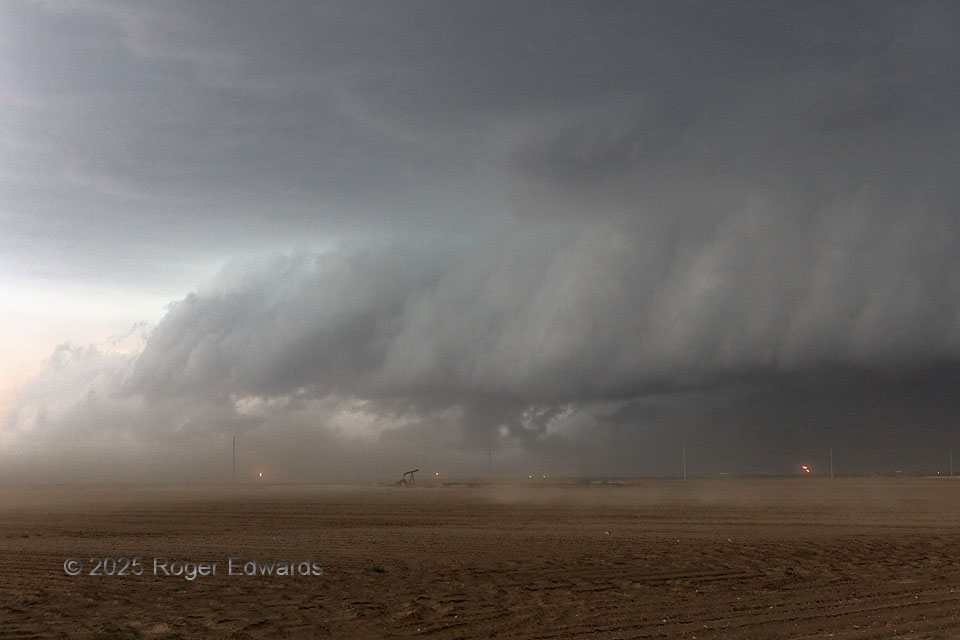
By the time this storm emerged again from the dust that cloaked it, outflow dominance had set in, and the supercell was surfing its own shelf cloud and gust front southeastward. [I had photographed another supercell’s outflow effects from near this spot 17 years earlier.] At this moment, the associated wind shift was passing through a field of oil wells, including flaring chimneys for natural gas. Such flaring is common across west Texas, and at Gulf Coast oil refineries, but it’s nonetheless fascinating to see outflow surge across them and change the direction of the flames. Where I was, dust still was raised in inflow, but the flames at right were pointing southward, already under the influence of outflow winds. The stack at left had a nearly vertical flame, indicating a fleeting slack zone as the gust front reached the flame. There, the burned gas would be lifted into the stream of forced ascent that ultimately would rise enough to condense the edge of the shelf cloud. With the hour getting late, Big Spring nearby and in the path, and substantial tornado danger nearly gone, we would find a closed bank drive-through under which to shelter vehicles from hail while letting the severe core pass overhead.
7 ESE Knott TX (29 May 25) Looking WNW
32.3746, -101.5377